




Beer Filtration: A Guide to Beer Clarity, Stability and Brewing Efficiency
Aug, 2026
Why is beer filtration important?
With a wealth of new beers flooding the market, ensuring your final product can compete by appealing in appearance and taste is crucial. Filtration plays an important role in helping breweries achieve clarity and stability in the final product. Beer filtration removes undesirable particles such as yeast, sediment and other impurities. This process improves appearance, supports shelf life and helps maintain the desired flavor profile.
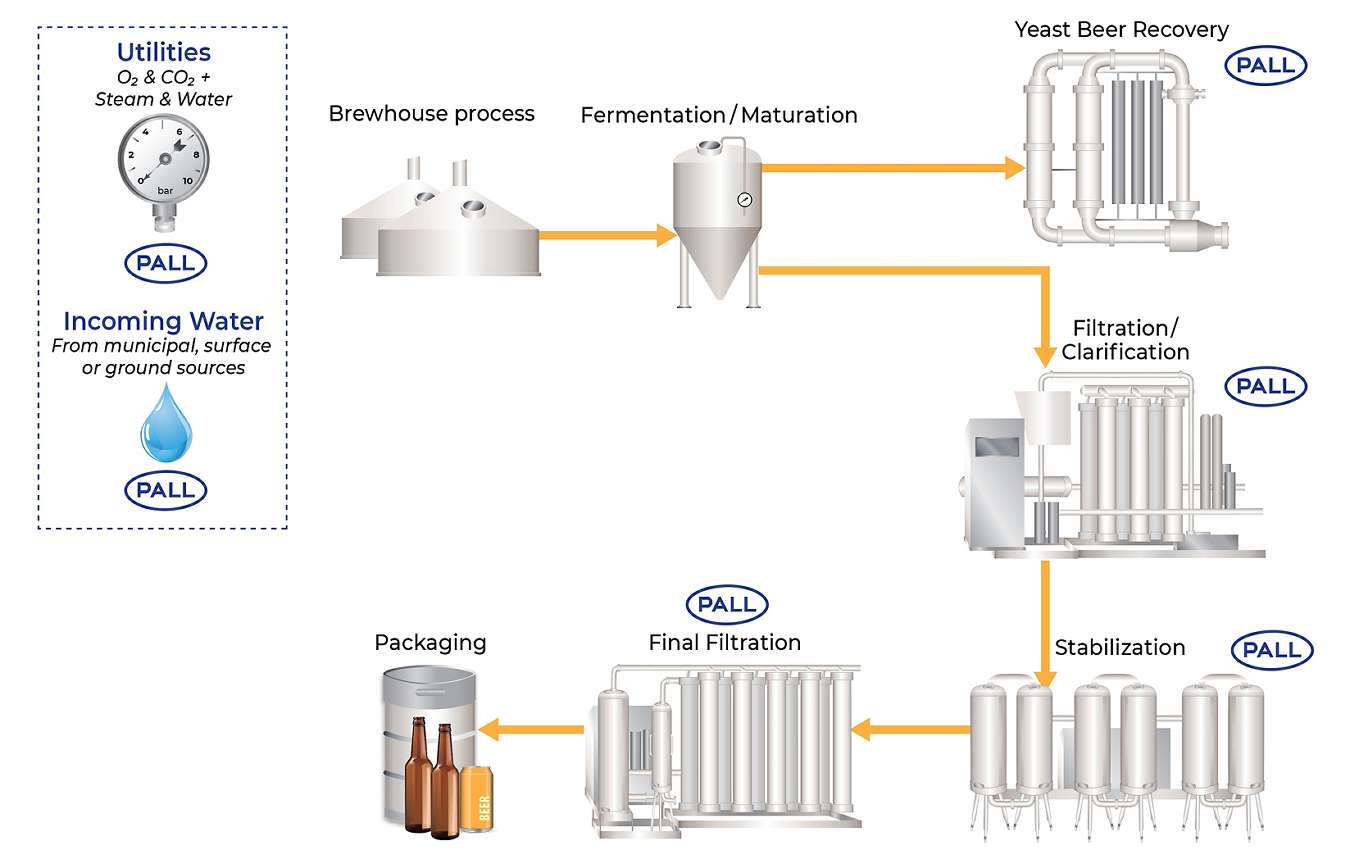
In addition to supporting beer quality, filtration plays an important role throughout the brewing process. From clarification and stabilization to final filtration and beer recovery, filtration technologies help breweries maintain product consistency while supporting efficient production.
In this blog, we discuss the importance of beer filtration, suitable methods and the benefits of using Pall's filtration systems for beer production.
How can beer filtration support brewery performance?
Beer filtration supports more than beer clarity and stability. Effective filtration can help breweries maintain consistent product quality, support process consistency, reduce product loss and support efficient operations. Throughout the brewing process, filtration technologies are used to support clarification, stabilization, final filtration and beer recovery.
What are the characteristics of a well-filtered beer?
Improved Clarity: A beer's aesthetics is vital in the final product. Cloudiness or haze can give the impression of a poorly crafted or contaminated product, with consumers often assuming that a clear beer is well-made. Specific beer styles have clarity standards. For example, lagers and lighter ales are usually expected to have excellent clarity.
The clarification process demonstrates the significant benefits of using membrane filtration systems instead of diatomaceous earth (DE) for brewers. DE is a substance derived from fossilized diatoms extracted from the earth, purified, finely milled, and then subjected to a heating process called calcination.
By using Pall filters, brewers can remove or reduce compounds that cause haziness in beer, including yeast cells, proteins, polyphenols, carbohydrates and other suspended particles. Explore beer clarification solutions
Enhanced Stability: Beer stability refers to a beer's ability to maintain its desired flavor, aroma and appearance over time. Filtering beer helps remove unwanted microorganisms such as yeast and bacteria that can cause spoilage during storage. This supports shelf life, product consistency and flavor stability. Protecting against oxygen uptake during beer filtration is also important, as oxidation can contribute to stale flavors over time. Beer filtration helps preserve the desired flavor profile and maintain beer quality throughout its shelf life. Explore beer stability solutions.
What are the key stages of beer filtration?
Beer Clarification: Clarifying beer involves removing solids and yeast after fermentation and maturation. This stage plays an important role in achieving the clarity and consistency expected in the final product.
Beer Stabilization: Colloidal stability and microbial stability are the main influencing quality criteria for a sufficient shelf life of packaged beer.
Final Filtration: This is essential in brewing to prevent harmful contaminants from reaching the final product and helps replace thermal pasteurization. More and more breweries apply beer final filtration, and with beer-specific membranes and solutions, this process can achieve maximum shelf life and satisfy consumer expectations.
Beer Recovery: Increasing extract yield while maintaining quality is an important focus for breweries. Pall's beer recovery platform uses membrane filtration to reclaim beer from excess yeast post-fermentation.
Pall's Solutions for Industrial Brewing
Every Pall technology platform is engineered to reduce losses during production, ensuring that our processes meet the highest standards for maximum yield without sacrificing beer quality. Enhanced stability through filtration ensures that each batch of beer maintains consistent quality. By removing potential sources of variability and spoilage, Pall filtration systems help breweries deliver a reliable and consistent product to consumers, building trust and loyalty.
How can filtration improve brewing efficiency?
In the brewing industry, process efficiency is important. Filtration supports brewing operations in several ways, helping breweries maintain production performance, reduce product loss and improve process consistency. Here’s how filtration can support brewing efficiency:
- High flow rates: Pall filtration systems provide high flow rates, allowing breweries to filter more significant beer volumes in less time. This helps increase production throughput, reducing the time required for filtration and improving overall process efficiency.
- Minimized downtime: Pall filters are known for their durability and reliability, engineered to withstand the demands of continuous operation, minimizing downtime due to filter replacement or maintenance. This ensures a smooth filtration process and optimizes production efficiency.
- Streamlined operations: Pall filtration systems integrate seamlessly into existing brewery operations, allowing for efficient and streamlined processes. The filters can be easily incorporated into the production line, minimizing the need for complex setup or adjustments. This simplification of operations helps save time and resources, contributing to overall process efficiency.
- Reduced product loss: Efficient filtration with Pall systems helps reduce product loss during production. This saves on raw materials and ensures that the final product meets the desired quality standards.
- Improved quality control: Pall filtration systems give breweries better control over the filtration process, allowing for precise adjustments and optimization. Enhancing quality control ensures consistent filtration performance, reduces the risk of deviations, and leads to higher overall process efficiency and a more reliable final product. Breweries can minimize product losses due to off-flavors, spoilage, or other quality issues by removing unwanted particles and impurities.
- Cost-effectiveness: By improving filtration efficiency, Pall systems help breweries optimize resource utilization, such as reducing product loss and utilities consumption plus making filter aids like DE unnecessary. This can lead to cost savings in raw materials, energy, and labor, making the brewing process more economically efficient.
Explore Beer Filtration Solutions
From beer clarification and stabilization to final filtration and beer recovery, Pall offers filtration solutions that support product quality and brewing performance.
Frequently Asked Questions
What is beer filtration?
Beer filtration is the process of removing unwanted particles, yeast and other impurities to support product clarity and stability.
Why is beer filtration important?
Beer filtration helps improve clarity, supports stability and contributes to consistent product quality throughout production.
What are the main stages of beer filtration?
Beer filtration can include clarification, stabilization, final filtration and beer recovery depending on brewery requirements.
Talk to a beer filtration specialist.