


Compressed air and gas filtration plays an essential role in food and beverage production. Air and process gases are used throughout manufacturing and packaging, where they can come into direct or indirect contact with products and processing environments. Filtration helps remove contamination from these streams, supporting product quality, safe operation and consistent processing conditions.
What is compressed air and gas filtration?
Compressed air and gas filtration is the process of removing contamination from gases used in food and beverage production. These gases, including compressed air, nitrogen and carbon dioxide, are used at multiple stages of processing and packaging.
Because these gases interact with both equipment and, in some cases, the product itself, filtration is applied to help control contamination and maintain suitable operating conditions across the production line.

Why is filtration important in food and beverage production?
As compressed air and gases are used throughout production, any contamination present in these streams can affect both the process and the final product. Filtration is therefore applied to help address these risks.
In practice, filtration supports:
- Food quality and consumer safety
- Stable and consistent production conditions
- Protection of equipment and processing systems
- Controlled operating environments
These requirements are particularly important in applications where gases come into closer proximity to the product.
Why is filtration important in food and beverage production?
Compressed air and gases are used across a wide range of processing and packaging applications. Their role can vary depending on whether they interact directly with the product or support the surrounding process.
Typical uses include:
- Direct contact applications including product handling and packaging
- Indirect contact applications including conveyors and control systems
- Utility functions that support equipment operation
Because of this broad use, filtration requirements differ depending on how and where the gas is applied.
What contaminants need to be removed?
Air and gas streams can contain multiple types of contamination introduced during compression, storage or distribution. These contaminants must be managed to maintain suitable conditions for production.
Common contaminants include:
- Liquid water and aerosols
- Oil vapors and aerosols
- Solid particles including dust
- Microorganisms including bacteria and viruses
The type and level of contamination present will influence the filtration approach used.
How are filtration solutions selected?
Given the variation in applications, filtration is typically applied in stages, with different solutions used depending on the level of contamination control required.
Selection depends on:
- The type of gas and its application
- The nature of contaminants present
- Whether the gas has direct or indirect contact with the product
- Process conditions such as temperature and pressure
- Applicable safety and quality requirements
These factors determine whether pre filtration, sterile filtration, or a combination of both is required.
Air and Gas Pre Filtration
Pre filtration is typically used as an initial stage to remove larger particles and liquid contamination from the air or gas stream. This helps protect downstream filtration steps and supports consistent system operation.
Depending on the application, pre filtration may include:
- Pleated depth filters for higher particle loading conditions
- High temperature filters for elevated process conditions
- High flow solutions for applications requiring increased throughput
- Where air dryers are used, coalescers can be installed to remove liquid contamination prior to further filtration.

Sterile Air and Gas Filtration
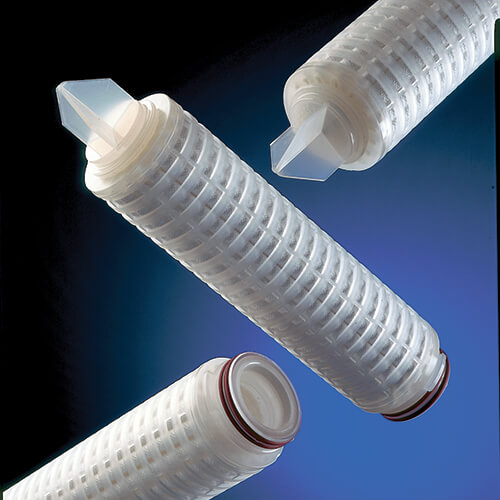
For applications requiring a higher level of contamination control, sterile filtration is applied after pre filtration. This is particularly relevant where gases may come into direct contact with the product or product contact surfaces.
Sterile filtration is used to remove microorganisms and support hygienic processing conditions in these applications.
Discuss your air and gas filtration requirements