


Cannabis Oil Filtration & Extraction Solutions
Improve clarity, taste and compliance with advanced cannabis oil filtration
What is cannabis oil filtration and why is it used?
Cannabis oil filtration is the process of removing particles, waxes and impurities during cannabis extraction and processing. Filtration is applied at different stages, including clarification, winterization and final polishing, to support product handling throughout production.
Cannabis oil filtration is used across extraction workflows to manage contaminants as material moves between process stages. This includes removal of solids after extraction, reduction of unwanted compounds and preparation for downstream processing such as distillation and formulation.
How does cannabis oil filtration work?
Cannabis oil filtration is integrated into extraction and purification workflows, where liquids pass through filtration systems to remove particulates and process-related impurities. These steps are applied throughout processing to manage solids, waxes and other compounds that may affect handling and further processing.
Filtration is typically applied in sequence, beginning with clarification and continuing through winterization and final filtration stages. This staged approach supports consistent processing as material moves through extraction and purification steps.
Video explaining cannabis oil filtration and extraction processes
What challenges affect cannabis oil extraction?
Cannabis oil production includes several technical challenges that must be managed throughout the extraction and purification process. These challenges arise from the composition of the raw material as well as the complexity of multi-stage processing.
Common challenges include:
- Managing removal of chlorophyll and unwanted compounds
- Maintaining product clarity across processing stages
- Supporting regulatory compliance requirements
- Handling variability in extraction processes
These factors require controlled processing approaches, where filtration is applied alongside extraction and purification steps.
Why does filtration matter in CBD extraction?
Filtration is applied at multiple stages of cannabis extraction to manage solids and impurities generated during processing. These steps occur during clarification, winterization and final filtration stages, with each stage addressing different materials within the extract.
By applying filtration throughout the process, operators can manage the presence of particles, waxes and other components as material moves between extraction, processing and final formulation.
Video showing filtration stages in cannabis oil production
Which Filtration Solution Is Right for Your Process?
Different filtration technologies are used at different stages of cannabis oil processing, with each stage addressing specific contaminants and process requirements.
Explore clarification, color removal and sterile air filtration solutions used throughout cannabis oil extraction and processing

Cannabis Oil Clarification
Cannabis oil clarification removes waxes, lipids and particulates following extraction. This step supports handling of the oil prior to further processing stages such as winterization or distillation.

Cannabis Oil Color Removal
Color removal is applied to reduce chlorophyll and other color bodies present in the extract. This step is integrated into downstream processing following initial clarification.

Sterile Air Filtration for Packaging
Sterile air filtration is applied to compressed air systems used during packaging and filling. This supports control of particulates and microorganisms in final handling stages.
What is the cannabis oil extraction process?
Cannabis oil extraction follows a sequence of interconnected stages, with filtration applied throughout the process to manage solids and impurities. While different extraction methods use different solvents and conditions, the overall processing steps share a similar structure.
Two common extraction methods used in cannabis oil production are ethanol extraction and CO2 extraction. Each method incorporates filtration at different stages to support processing and purification.
Ethanol extraction process
Typical ethanol extraction includes the following stages:
- Extraction of cannabinoids into solvent
- Clarification to remove solids
- Color removal to reduce chlorophyll
- Molecular distillation
- Solvent recovery
These steps follow a sequential workflow in which filtration is applied to manage solids and prepare the extract for downstream processing.
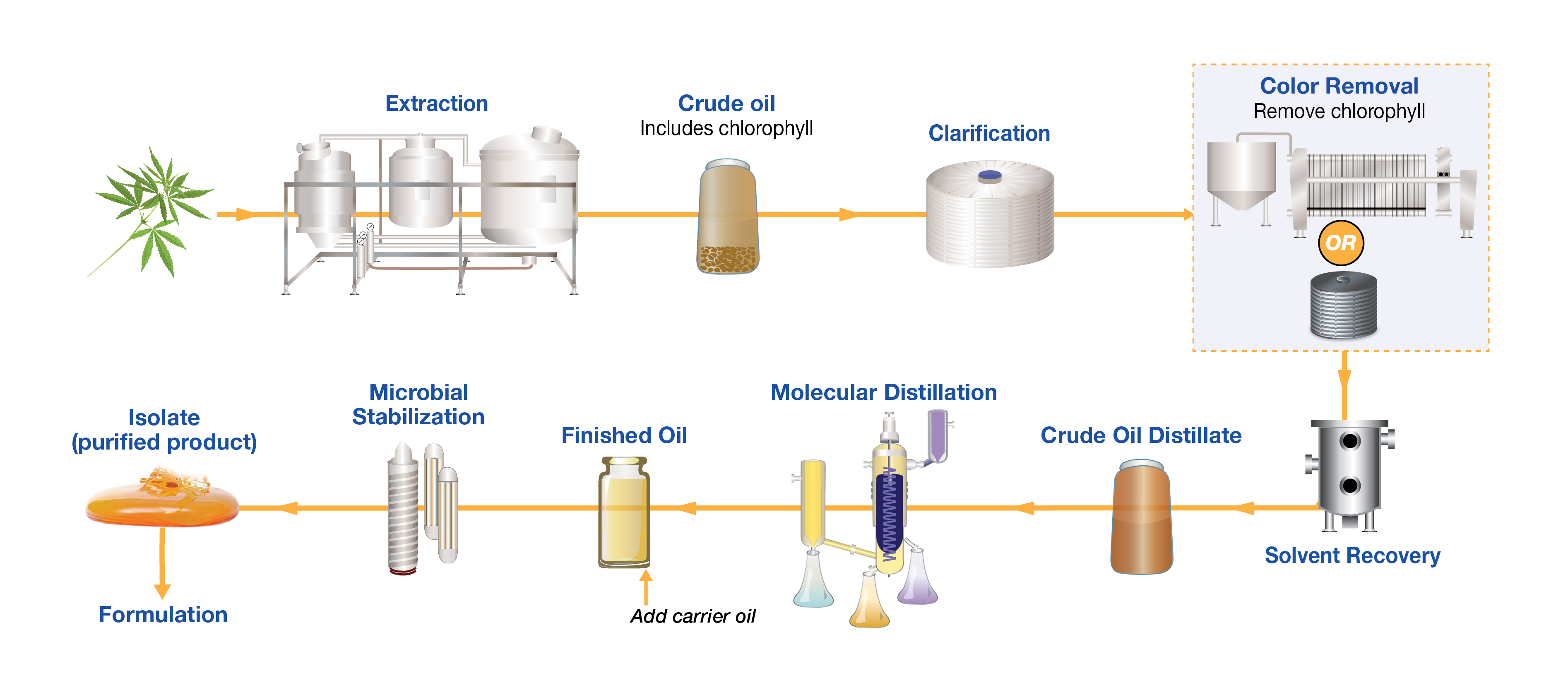
Ethanol extraction process flow diagram showing filtration and processing stages in cannabis oil production

CO₂ extraction process
Typical CO₂ extraction includes:
- Extraction of cannabinoids
- Winterization
- Pre filtration
- Clarification
- Molecular distillation
- Solvent recovery
As with ethanol extraction, these stages are connected through a sequence of processing steps where filtration is applied to manage intermediates and prepare material for final processing.
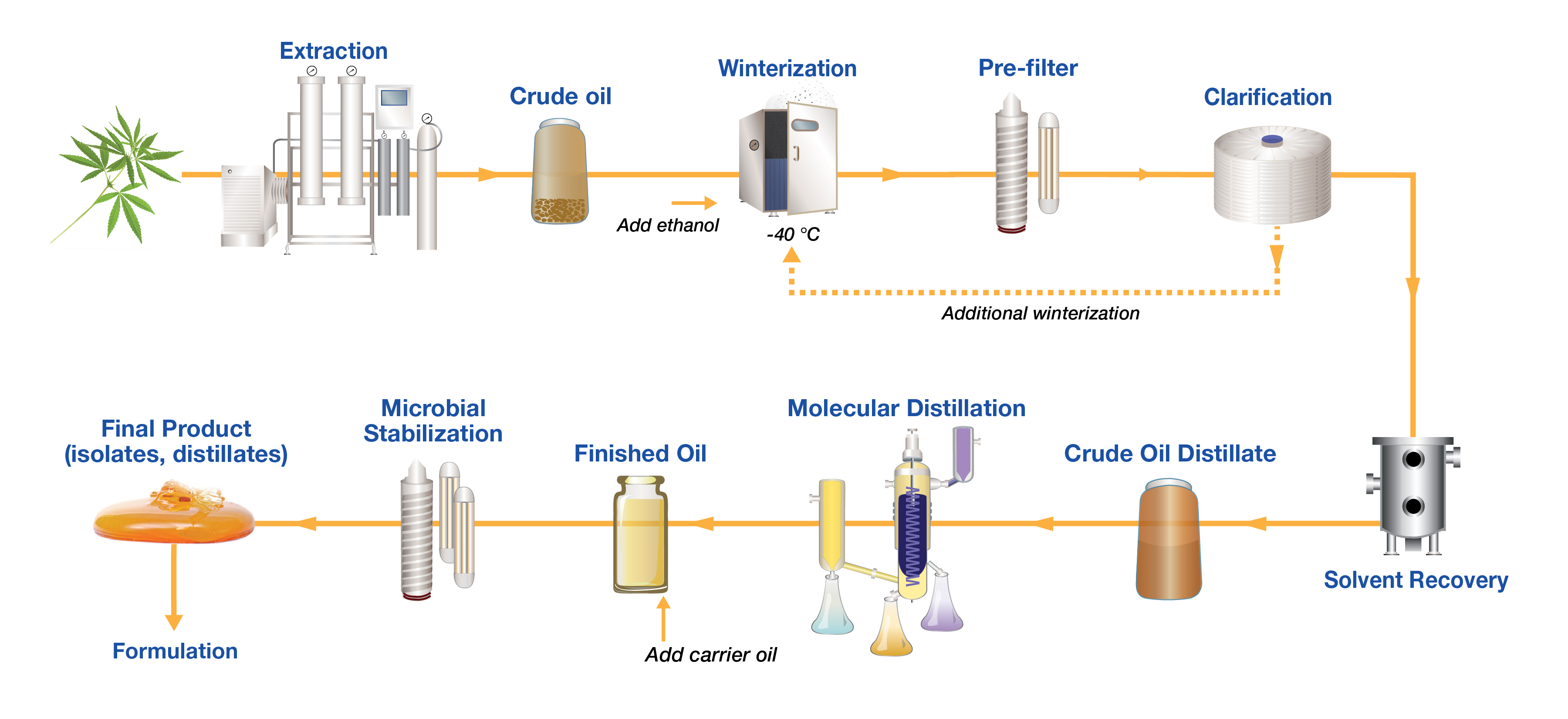
CO₂ extraction process flow diagram showing filtration stages and processing steps
Who uses cannabis oil filtration systems?
Cannabis oil filtration systems are used by CBD extraction companies and cannabis processors working with ethanol and CO₂ extraction methods. These users apply filtration across multiple stages of production to support extraction, purification and final processing workflows.
Talk to a Cannabis Filtration Expert
Discuss filtration approaches across extraction, purification and processing stages.
Frequently Asked Questions
What is cannabis oil filtration?
Cannabis oil filtration is the removal of particles, waxes and impurities during extraction and processing.
What is winterization in cannabis processing?
Winterization is a step used to remove waxes and fats from cannabis oil before further purification.
How is chlorophyll removed from cannabis oil?
Chlorophyll is reduced during color removal stages using filtration and adsorption processes.
What filtration steps are used in CBD extraction?
Filtration is applied during clarification, winterization, distillation and final processing stages.
Contact us for a free 30-minute filtration consultation