



What Is Enzyme Filtration and Why Is It Important?
Enzyme filtration supports key steps in enzyme production by helping manage materials that form during fermentation and by supporting filtration before packaging. Most enzymes used in food and beverage production are manufactured at industrial scale through fermentation. This process uses microorganisms like yeast, fungi and bacteria. Maintaining a safe and well controlled production environment is important for producing high purity enzyme. Filtration appears at several points in the process, including filtration of fermentation ingredients and later stages that support product consistency before packaging.
Our solutions support enzyme filtration at several points throughout the production process, from filtering fermentation ingredients to the final filtration step before packaging.
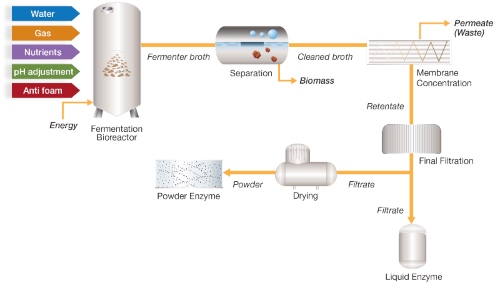
A simplified overview of key steps in a typical enzyme production and filtration process.
How Does the Enzyme Filtration Process Work?
Enzyme production begins with fermentation, where microorganisms grow under controlled conditions. During fermentation, parameters like oxygen, temperature, pH and nutrients must remain stable for the organism to function effectively. A shift in those conditions could result in the fermentation process being disrupted and may lead to reduced quality or loss of product.
As fermentation progresses, by products like water, nutrients and chemicals accumulate. These need to be managed so that the environment remains suitable for enzyme production. Filtration plays a key role in this process and may include:
- Biomass and impurity removal
- Liquid and gas based filtration steps
- Activated carbon filtration when appropriate
- Centrifugation and clarification stages
These steps help maintain process stability and support the consistency of the liquid enzymes produced.
What Happens After Fermentation?
When fermentation is complete the mixture contains the microorganism along with enzyme rich broth. Several stages of filtration help refine the product.
Improve fermentation performance with solutions that protect yield and reduce contamination risk.

Concentration and Final Enzyme Filtration
Further filtration supports high purity and consistency before packaging. Some processors also use polishing filtration before packaging. Membrane filters and housings support these steps.
How Do Pall Solutions Support Enzyme Filtration?
We offer solutions that support different stages of enzyme production. These solutions align with key filtration points and provide options for:
- Managing fermentation ingredients
- Protecting fermentation environments
- Clarifying fermentation broth
- Supporting final filtration steps before packaging
What Filtration Solutions Are Available for Each Stage?



Related Resources
Integrity Testing
Utilities Filtration

Need help choosing the right solution?
Speak with one of our experts to discuss your application needs.
Frequently Asked Questions
What is enzyme filtration
Enzyme filtration refers to the steps used to support high purity and consistency during enzyme production. These steps occur throughout the process, beginning with filtration of fermentation ingredients and continuing through the final filtration before packaging.
Why is filtration important during fermentation
During fermentation, microorganisms grow under controlled conditions. Oxygen, temperature, pH and nutrients must remain stable. As the process continues, by products like water, nutrients and chemicals accumulate. Filtration helps manage these materials so conditions stay suitable for enzyme production.
What filtration steps occur after fermentation
After fermentation, the mixture contains the microorganism and enzyme rich broth. Filtration steps such as clarification, concentration and final filtration help refine the product before packaging. Some processors also use polishing filtration in the final stages.
How do air and gas filters support fermentation
Air and gas filtration supports controlled fermentation environments by helping maintain the conditions needed for microorganism growth. Additional information is available in the Fermentation Air and Gas Filtration section.
What equipment supports final enzyme filtration
Membrane filters and housings are available for the final steps in enzyme production. These support filtration before packaging and align with the process stages described on this page. The IMMFDH4O housing is one available option.
What other filtration solutions support enzyme production
Additional solutions include lenticular filters for food and beverage applications, utilities filtration for air, steam and water, and integrity testing to support filtration processes.
Connect with our team to discuss your enzyme production filtration needs.